Before
Platform status mistaken for availability
- Products filtered only by Shopify
ACTIVEstatus. - Unpublished pages entered the channel feed.
- Landing pages returned errors even though the product appeared active internally.
Case study · Inner Union Home
Inner Union Home is the Shopify home-decor store behind this catalog and Google Merchant Center repair. The work covered storefront data, product availability, shipping, taxonomy, attributes, images, pricing, language, and SEO.
The visible warnings were symptoms of several different catalog and platform-state problems.
| Issue class | Evidence | Business risk |
|---|---|---|
| Shipping / currency | 6,262 offer-currency and shipping-method mismatches, plus 448 listings without a valid destination shipping service. | Broad product disapproval across target countries. |
| Language | 1,740 language mismatches caused by market/feed configuration conflicts. | Products suppressed or rejected in affected markets. |
| Shipping weight | 1,344 missing-weight errors at the initial snapshot; the recurring class later grew as the catalog expanded. | Incomplete shipping data and unreliable channel eligibility. |
| Attributes / taxonomy | 358 missing product-type attributes, inconsistent product types, and unrecognized category values. | Weak relevance, missing filters, and category-specific feed errors. |
| Images | 105 images below the high-resolution threshold, plus low-quality and supplier-style assets. | Reduced eligibility, weaker presentation, and lost conversion confidence. |
| Price / SEO | Price mismatches, invalid compare-at prices, missing metadata, long titles, keyword stuffing, and duplicate titles. | Disapprovals, misleading offers, and diluted organic relevance. |
| Publication state | 428 Shopify products marked ACTIVE had no publication timestamp or live product URL. | Landing-page errors because “active” did not mean publicly available. |
The “before” is a real Inner Union Home Merchant Center capture. The “after” is a verified post-fix audit result, shown separately so we do not fabricate a Google interface.
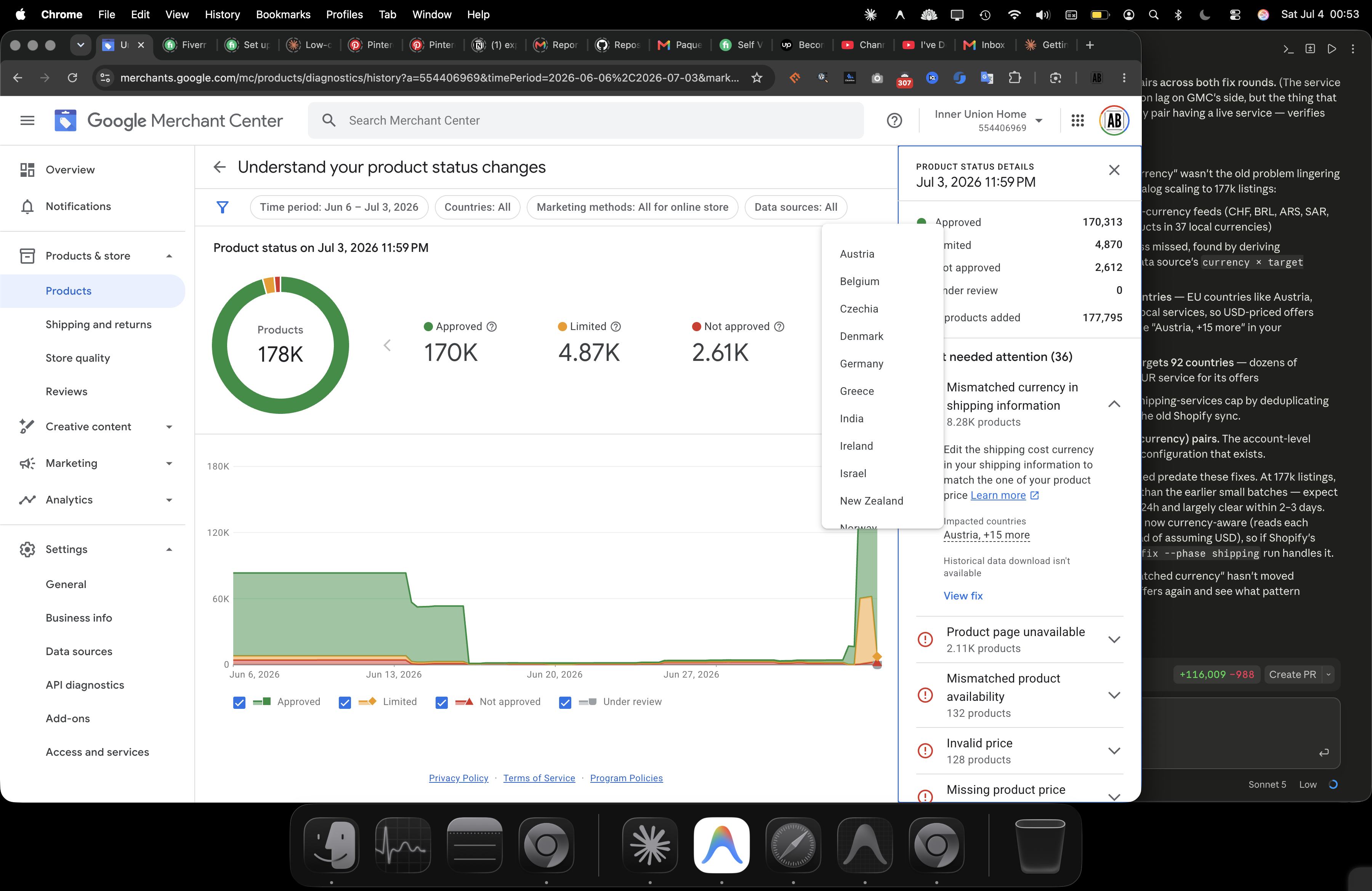
6,262 → 0
Country-level shipping services were aligned with each offer currency. The associated missing-shipping-service failures were resolved, and feed eligibility gained publication, taxonomy, weight, and landing-page safeguards.
Examples of how the Inner Union Home audit translated warnings into durable catalog rules.
Before
ACTIVE status.After
Before
After
Measured repair
Per-country shipping services were aligned to the feed currency, resolving the shipping/currency mismatch and the associated missing-service failures. The catalog workflow was then consolidated into a repeatable doctor process covering shipping, language, attributes, images, and title limits.
Apply this approach to your catalog
Share your store, catalog size, and target channels. The first call will focus on your visible symptoms and the most useful audit scope.